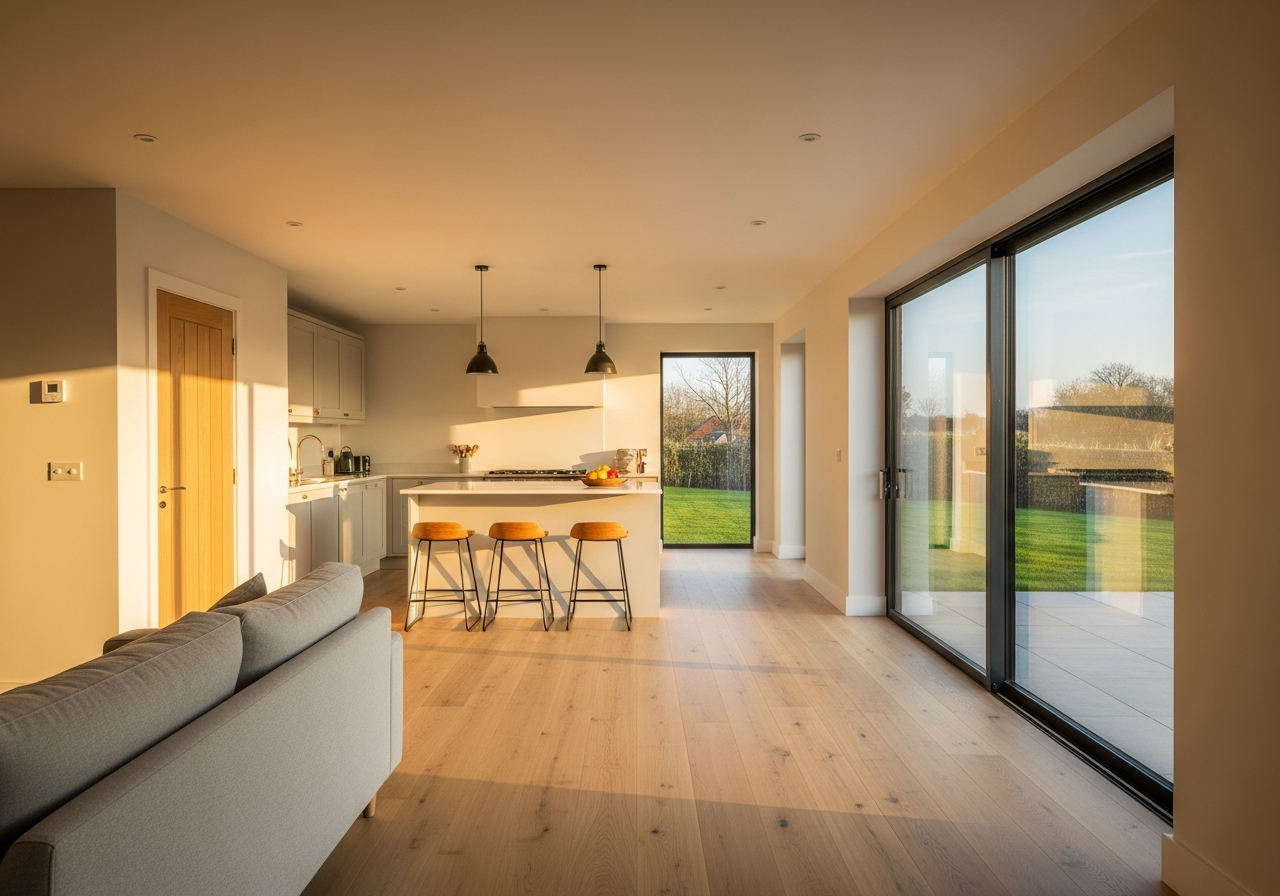
The Future Homes Standard — what developers need to know.
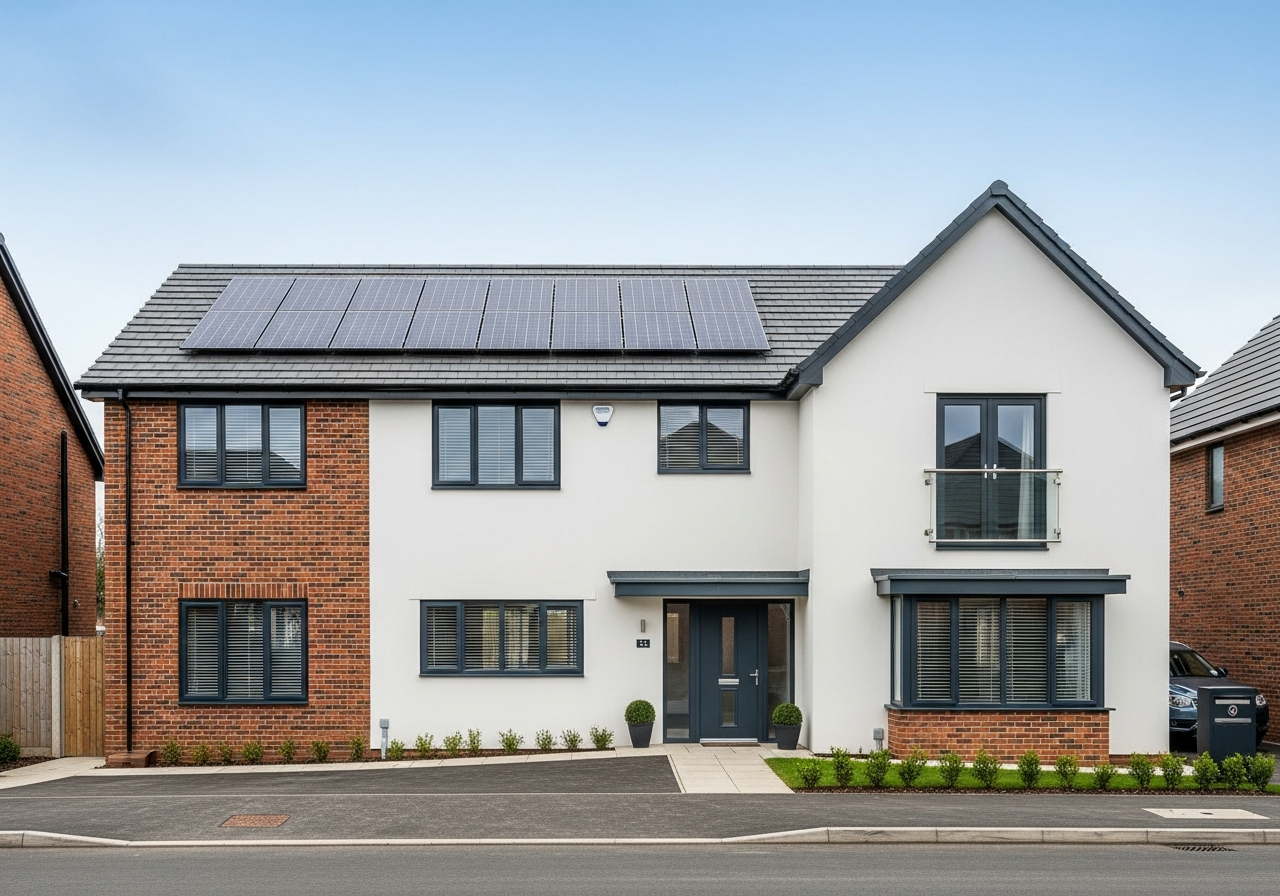
The Future Homes Standard (FHS) signals one of the most significant shifts in UK residential construction in a generation. New homes built from 2025 onwards will be expected to produce 75–80% fewer carbon emissions than those built under previous Building Regulations — and crucially, they will be expected to do so without the need for retrofit later.
For developers and housing providers, this changes the way heating systems must be considered. Gas boilers are out; low-carbon electric heating, paired with renewable generation, becomes the new default.
What does the FHS actually require?
The Standard does not mandate any single technology. Instead, it sets a performance ceiling. Each home must demonstrate, through SAP 10.3 (and in time, the Home Energy Model), that its predicted carbon emissions sit well below today's targets.
In practice, the homes that pass most easily share a set of common features:
- Fabric-first envelope: high insulation values and low air permeability
- Low-carbon heating with no on-site combustion
- Mechanical ventilation with heat recovery, or equivalent strategy
- Renewable generation, typically solar PV
- Smart, zoned controls that match output to occupancy
Why ecoHeatwave fits the model
ecoHeatwave is a thin-film radiant heating system installed behind the plasterboard ceiling. It draws electricity from the same supply that powers solar PV and battery storage, and pairs with an air-source heat pump cylinder for hot water. There is no combustion, no flue, and no annual servicing requirement.
In SAP 10.3 modelling, that combination has consistently delivered EPC A ratings on three- and four-bedroom new-build typologies — without the spatial penalties of plant rooms or wet underfloor systems.
The buildings that will look ahead of the curve in 2030 are the ones being specified to the Future Homes Standard today.
Planning for it now
Even ahead of the 2025 transition, lenders, valuers and local authorities are starting to favour FHS-aligned schemes. Specifying low-carbon heating early in the design process — rather than retrofitting it after planning approval — reduces both risk and capital cost.
For developers looking at how to align an upcoming scheme with the Standard, the simplest first step is a comparative SAP study against the homes you already build. We are happy to run one alongside your design team — book a consultation to start the conversation.